Article
Welcome to EyeICare
Article #8 : Eye care professional
8-March-2015
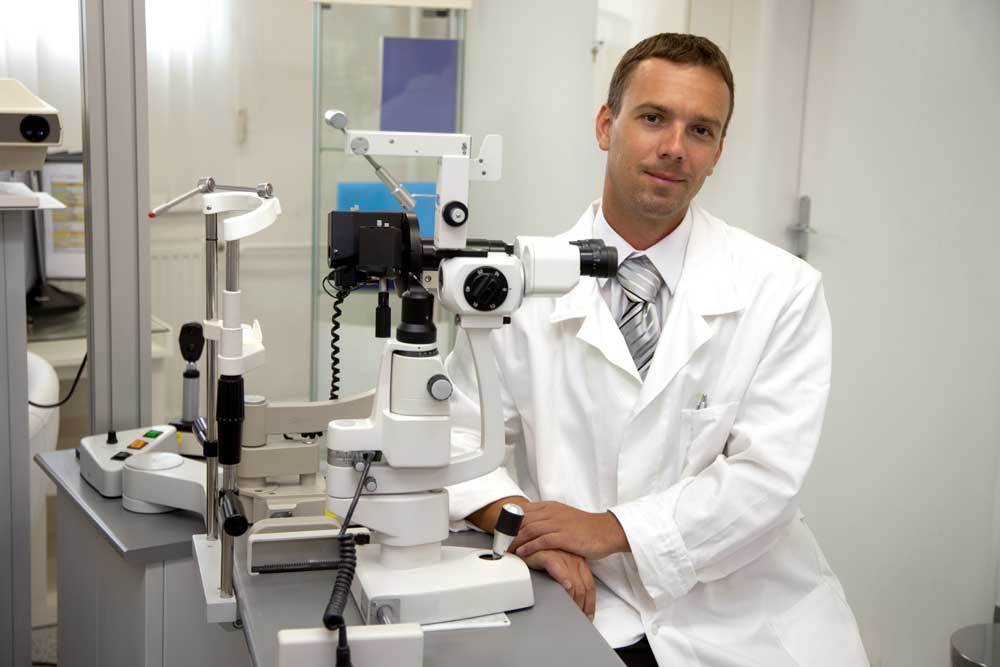
An eye care professional is an individual who provides a service related to the eyes or vision. It is a general term that can refer to any healthcare worker involved in eye care, from one with a small amount of post-secondary training to practitioners with a doctoral level of education.
Orthoptist: Orthoptists specialize in diagnosis and management of eye movement and coordination problems, misalignment of the visual axis, convergence and accommodation problems, and conditions such as amblyopia, strabismus, and binocular vision disorders, as outlined by the International Orthoptic Association. They may assist ophthalmologists in surgery, teach orthoptic students, students of other allied health professions, medical students, and ophthalmology residents and fellows, act as vision researchers, perform vision screening, perform low vision assessments and act as clinical administrators. In many countries orthoptic education requires an undergraduate degree for program entry followed by a couple years of postgraduate studies in orthoptics. In other countries orthoptics is offered as a Masters degree. The World Health Organization defines the eyecare work of orthoptists as the study and treatment of defects in binocular vision resulting from defects in the optic musculature or of faulty visual habits. It involves a technique of eye exercises designed to correct the visual axes of eyes not properly coordinated for binocular vision.
Oculist: Either an ophthalmologist or optometrist, the older term "oculist" was primarily used to describe eye care professionals that are trained and specialized in the eye care field. The difference between an ophthalmologist or an optometrist is made by the specializations they may choose. If the oculist is trained and specialized in treating medical conditions that may affect the eye and result in an eye defect will be referred to as an ophthalmologist. Optometrists, on the other hand, are the eye care professionals that are specialized in only treating eye defects by prescribing the appropriate corrective lenses. They are also referred to as "eye doctors". The main task of the optometrist is to correct the visual deficiencies with the help of the lenses. The main difference between these two professions is that although both of them may administer eye exams, only the ophthalmologist may solve eye-related problems that may occur in all areas of the eye. Nonetheless, optometrists are specialized in detecting vision problems and correcting them, but they may not perform tasks that ophthalmologists may, such as eye surgery. Another important difference between the types of oculists is that while optometrists may obtain their doctorate by graduating at a special school in which they are trained to be optometrists, ophthalmologists are medical doctors who need to graduate from medical school and many years of internships in order to be able to get their degree. Moreover, because of their more advanced background in the study of eye care, ophthalmologists may proceed in their studying in this field and specializing in domains such as pediatric ophthalmology, corneal disease or ocular oncology. This is the reason why ophthalmologists are often classified as surgeons rather than doctors. The term "oculist" was therefore used to describe these two professions as a result of the similarities that exist between the two. Firstly, both ophthalmologists and optometrists receive the appropriate training which will help them in detecting the vision related problems and to diagnose and treat certain eye conditions. Ophthalmologists also were the only ones who were capable of treating the terrible disease eye-aids, it was a disease were the eyes would become extremely dirty and blurry
Orthoptists specialize in the diagnosis and management of problems with eye movement and coordination, such as misalignment of the visual axis, binocular vision problems, and pre/post surgical care of strabismus patients. They do not directly treat ocular disease with medications or surgery. Orthoptists treat patients using optical aids and eye exercises[9][not in citation given] and primarily work alongside doctors to co-manage binocular vision treatment, but also often do eye and vision testing. All three types of professional perform screenings for common ocular problems affecting children (such as amblyopia and strabismus) and adults (such as cataracts, glaucoma, and diabetic retinopathy).[10] All are required to participate in ongoing continuing education courses to maintain licensure and stay current on the latest standards of care.
Article #7 : Visual impairment
7-March-2015
Refraction
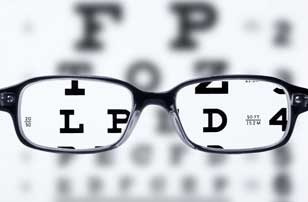
Visual impairments may take many forms and be of varying degrees. Visual acuity alone is not always a good predictor of the degree of problems a person may have. Someone with relatively good acuity (e.g., 20/40) can have difficulty with daily functioning, while someone with worse acuity (e.g., 20/200) may function reasonably well if their visual demands are not great. Some people who fall into this category can use their considerable residual vision their remaining sight to complete daily tasks without relying on alternative methods. The role of a low vision specialist (optometrist or ophthalmologist) is to maximize the functional level of a patient's vision by optical or non-optical means. Primarily, this is by use of magnification in the form of telescopic systems for distance vision and optical or electronic magnification for near tasks. People with significantly reduced acuity may benefit from training conducted by individuals trained in the provision of technical aids. Low vision rehabilitation professionals, some of whom are connected to an agency for the blind, can provide advice on lighting and contrast to maximize remaining vision. These professionals also have access to non-visual aids, and can instruct patients in their uses. The subjects making the most use of rehabilitation instruments, who lived alone, and preserved their own mobility and occupation were the least depressed, with the lowest risk of suicide and the highest level of social integration. Those with worsening sight and the prognosis of eventual blindness are at comparatively high risk of suicide and thus may be in need of supportive services. These observations advocate the establishment and extension of therapeutic and preventative programs to include patients with impending and current severe visual impairment who do not qualify for services for the blind. Ophthalmologists should be made aware of these potential consequences and incorporate a place for mental health professionals in their treatment of these types of patients, with a view to preventing the onset of depressive symptomatology, avoiding self-destructive behavior, and improving the quality of life of these patients. Such intervention should occur in the early stages of diagnosis, particularly as many studies have demonstrated how rapid acceptance of the serious visual handicap has led to a better, more productive compliance with rehabilitation programs. Moreover, psychological distress has been reported (and is exemplified by our psychological autopsy study) to be at its highest when sight loss is not complete, but the prognosis is unfavorable.10 Therefore, early intervention is imperative for enabling successful psychological adjustment.